Showing posts with label Thomas Palaiologos. Show all posts

02 July 2014

Bessarion on educating the imperial children


Early in 1465, Thomas Palaiologos directed that his children be sent from Corfù to Italy. He had gone to Italy in the winter of 1460. Their mother had died in August 1462. We know nothing of their circumstances in Corfù without either parent. The only individual in Corfù of whose presence we can be sure was Giorgios Sphrantzes, loyal Palaiologan courtier, but he had declined to be part of Thomas’ court in exile.

Thomas died in March of 1465. A sense of impending death may have made him send for his children. The children -- Zoe, age 17; Andreas, 12; Manuel, 7 -- arrived in Ancona in the summer. There appears to have been considerable and frantic correspondence between individuals in Ancona with some responsibility for the children, and Cardinal Bessarion in Rome whom Thomas had left as their guardian.

Bessarion wrote, or dictated, a letter to an unnamed individual in Ancona who was to be head of these young remnants of an imperial household. This person, and Dr. Kritopoulos, were to work out the details of the household and education, and send them to Bessarion. Meanwhile, the Pope, Paul II, would give 300 ducats a month for various expenses. Of this, 200 ducats were to go directly to the children’s household, for 6 or 7 servants each, for food, for 3 or 4 horses and their food, and for a little extra each month, depending on what was needed.

Bessarion, after reading the correspondence, had decided that a Greek teacher was essential. He was concerned about their understanding of Greek, concerned enough that he was not writing them directly but wanted his letter, in demotic Greek, read to them several times until they could understand it. They were to have a Latin teacher, who would certainly have taught Italian. They were to have Dr. Kritopoulos, and a translator or interpreter. This raises the question of what language they had been raised to speak in Greece, which they had left five years earlier, and what language they had been speaking in Corfù, but it is clear from Bessarion that their conversational demotic Greek was considered deficient.

Bessarion says nothing about Greek or Italian literature, mathematics, philosophy, history, swordplay, riding, hunting, or anything normally included under education. He does mention writing, but writing would be part of the language education. The rest of his instructions concern manners, behavior, how these young imperials were to present themselves to the world. The instructions give a chilling view of the world these children had entered, but Bessarion had observed Thomas for four and a half years, and he was keenly aware of what was necessary for these children without parents, without a country, and without income of their own.

They would be, he wrote, living on strangers’ money and strangers’ expectations. They could not vaunt their imperial descent. They were orphans, foreigners, beggars. Any advantages they had would come because they were pleasing. So they were to dress and live completely in the Italian style. Their diet was to be restrained, and their table manners excellent, as well as their manners toward the members of their household. They were not to be rude, but well-behaved, humble, and serene.

They were to learn to bow appropriately to each rank, to touch their hats, lift them slightly, or remove them according to the social standing of the person they encountered. They were to walk with dignity in public, speak in low voices, keep their eyes down, and not gape or giggle. When people came to pay calls, they were to learn how to make appropriate conversation and high-minded without laughing or chattering too much. They were to learn how to evaluate the Greeks who would come to their household, and the appropriate courtesies for each, particularly towards those in a difficult situation.

If they met a cardinal or the Pope, they were to kneel and not rise until told to. It would not shame them -- this was something kings and great rulers did. They should not sit in the presence of individuals of high rank -- Thomas told Bessarion he had often told them that. They were to be completely obedient and deferential to their administrator and doctor and teachers.

The household was to have one or two priests of the Latin rite who would be constantly saying the liturgy so they could become letter-perfect in it. They were to observe the Latin rite meticulously, and learn the kneelings and crossings and gestures, copying the Italians. They were not to smile at anything in the service, and not to whisper to each other. It had been reported to him that on the trip over, the children had walked out of the church some of the members of their suite had walked out of the church at the liturgical commemoration of the Pope:  this could not happen again, because if they did it it were to happen again, they the children would have to leave Italy, and then they would be beyond Bessarion's protection.

They were to come to Rome -- for this they should learn by heart little addresses they could make to the Pope -- but not until October at least, because there was plague in the city. The household should remove itself from Ancona, an old city liable to be unhealthy, and go up to the mountains to Cingoli where the Bishop of Osimo -- one of Bessarion's people -- had a house he wanted to offer them. Actually, the archons in Rome thought it might be a good idea for the children to stay there all the time.

They did go to Rome. Sphrantzes, one of those in a difficult situation, came to see them the next year and stayed for five weeks, but beyond this, we know nothing about their lives as children.

When she was 24, Zoe was finally married, to Ivan III of Moscow. Her sister and cousin had been married when they were 14. Her formal education must have been of some use. Bessarion died shortly after Zoe's marriage and so her brothers lost his protection. The boys were over-educated for what life in Italy had to offer them.   Andreas tried to auction off his title to the throne of Constantinople. Manuel left to visit the important courts, looking for a job or an allowance, but no one offered him enough to maintain the household he thought he should have. Andreas’ complicated life has been excellently described by Jonathan Harris. In 1476 Manuel went to Turkey where he was welcomed by Mehmed II and given a generous income. His own son converted to Islam.  


[More next week.]


09 January 2012

The Bride had dinner at Ragusa

 
Bride, Marriage at Cana - Ο Γάμος στην Κανά

 Ag. Nikolaos Orfanos, Thessaloniki


When the fifteen-year old Helena Palaiologina sailed for Ragusa en route to her marriage to Lazar Branković of Serbia, she had wanted to stop at Corfú.  That stop and, in fact, the whole trip seem to have provided occasion for a great deal of fuss. 

In anticipation of her imminent arrival, the Ragusan council worked out the details for her formal reception:

A committee of five nobles would meet her at Cavtat, a short sail south of Ragusa.  The rettor* and the Minus** would meet her at the port. She would be led to the rettor's palace.  (This was the Italian style of welcome: had she gone to Constantinople as a bride, she would have been met by the court ladies.) The ladies of Ragusa -- that would be the upper-class ladies -- would greet her in front of the church of the Virgin.  Housing would be supplied for her entourage, and for the contingent that her father, Thomas, had sent by land (no word on the sizes of the entourage or contingent).


A committee of five would be appointed as her escorts.  The rettor would dine with her once.  A committee of three would be appointed to see to the furnishings of her suite and to her provisions.  There would be an allowance of 50 hyperpers a day for food: "bread, wine, meat, poultry, wax, sweets, and other necessary things."***  Live animals and poultry would be provided so they could be prepared as she preferred. (No word as to whether she was bringing her own cook.)

Someone was to buy at Venice, for a wedding present, twenty "arms"**** of crimson velvet, and ermine to the value of 300 ducats.  The bridegroom, Lazar, was to have a gift of 300 ducats worth of cloth from Mantua or Florence.  Arrangements were to be made for the bride to invite the gentlewomen of Ragusa to the palace to dance, and then dine.

Measures for the security of Ragusa would be taken.  Thomas, Despot of the Morea, having invited the Republic of Ragusa to be represented at the wedding: Ragusa would send two nobles.

This is all the information I have found, but I have questions. 

Presumably there were interpreters.  Had Helena learned Italian from her mother? Did she have western clothes, or was she dressed as a Greek.  Had Thomas ever had a party or a dance -- how was she to know how to act with these ladies she was to entertain?  How long was she to stay in Ragusa before going to meet Lazar?  And so on . . .


* rettor = governor. 
** Minus = the inner council.
*** Salvadexine is also listed, but I can't discover what that might be.
**** arm, braccio = cloth measurement, of about 66-68 cm.  Every city had its own, slightly differing, measurement.  For Venice a braccio of wool was .683m, and for silk .638m.


This account is from N. Iorga. Notes et extraits pour servir l’histoire des croisades au XVe siècle. (Bucharest. 1915) 2: 416.

For the picture here, I am reusing a bride who has already sat in for another young woman, there being a vast shortage of contemporary images of Byzantine brides, fifteenth-century galleys and fifteenth-century Ragusa.  Contributions from readers would be appreciated.


09 December 2011

Bessarion calls for a crusade

Cardinal Bessarion, detail from manuscript.


In 1458, Mehmed entered the Morea to obtain surrender of the territories formerly held by Constantine.  Corinth, Kalavryta, and Patras were surrendered to him.  He left the Morea ostensibly under the control of Thomas and Demetrios Palaiologos who were to pay him tribute.  Their incoherent administrations were fighting among themselves with adherents changing sides while Thomas clawed for the ascendency.  In 1459 in Italy, the newly-elected Pius II called a congress at Mantua for the purpose of forming an alliance of Christian princes against the Ottomans.  Cardinal Bessarion was given heavy assignments toward this goal.  In May of that year he wrote a letter about the proposed crusade to Fra Jacopo de Marchia, a Franciscan professor. It took four and a half more years before the crusade sailed in August 1464.

Bessarion decribed the Morea as a land flowing with milk and honey, but he had not been there for 25 years. Some of his numbers are extraordinary, though the Isthmus is all right, and they should be taken not as untruthfulness but as a measure of his desire for its recreation as the heart of a restored Eastern Empire. I am not convinced of his view of Thomas, but he was trying to rally the troops.****

This is my draft translation of part of the letter:

 * * * * *

In Greece there is also this large province, commonly called Morea, about 800 miles in circumference, with most the most fruitful, fertile fields and a great abundance of everything, not only providing that which is necessary for human use, but also for producing bread, wine, meat, cheese, wool, cotton, linen, silk, kermes, cochineal, small berries for making dye. Everything is found in abundance.  Grain is two stera for one ducat .  . . wine costs nothing, eight castrones a ducat.** Hay and straw for horses without number so that, in addition to the inhabitants and locals of the place, the country can feed 50,000*** horsemen without having to get food from any other source. Last year the Turks came in with 80,000 mounted soldiers, and innumerable foot and wagons, and they stayed five months and still had an abundance of food, and even after they left everything was very cheap, so abundant is everything.

Further, it is almost an island, its shape is round and large and full, surrounded by the sea, with a narrow branch by which is it connected to the mainland, a width of six miles, by which protection the whole country is secure.  Also, the cities which it has, are almost 300, walled, very strong and very well fortified; also, innumerable animals, and a generous supply of men. Also, it is well situated, for Italy, Sicily, Crete and the other islands, Turkey, Albania, and Macedonia, and other parts of Christendom, so that, if it is in Christian hands, it could be the means of major attacks on the Turks and a great use to Christians: if it is in Turkish hands, it would threaten great danger to Christians.  


Such, therefore is the land which the Turkish infidels almost completely occupy. Last year they entered it with a great force, in a betrayal by evil men, except for a few places, in which the lords of those places, who are both brothers of the lord, the emperor of the Greeks, the brother dead in the Constantinople war, received him.  But this year, in January last, God resuscitated the spirit of one of those lords, Thomas Palaiologos, despot of the Morea, and he took up arms against the infidels for his own liberty and that of his people, and within two months he recovered all the lost places.  Blessed be God!  The thing is great and wondrous, and was and is a miracle, and it holds out to us great hope for future things, so long as we understand how to use it well!


* In 1480, Bartolomeo Minio expected Argolid grain to be 3 stera for a ducat.
**  Castrones: castrated goats.  
***The largest semi-reliable number we have for horsemen is 10,000 in 1417 under John Palaiologos against the Principality of Achaia.  It comes from a Venetian chronicle.  A more reliable number is a Venetian document of 1418 which gives 6000.  Neither Plethon nor the Cronicle of the Morea expected more than 6000 at any one time, and in 1444 John VIII said there were 6000.
**** In fact, when the crusade actually came off, the Venetians had to arrange for Thomas to be told that he was not going with them.


20 September 2011

The Bride stopped for lunch at Corfú

 
A Serbian Helena of Byzantium,
possibly the one involved here.


Helena Palaiologina, daughter of Despot Thomas of the Morea, was sent at the age of fifteen to marry Lazar Branković of Serbia.  This was in October of 1446.  She traveled with two Ragusan trading galleys and a galeota.  When the ships returned to Durazzo, a complaint -- apparently concerning unreasonable delays, bad manners, livestock, and excessive drinking -- was filed against the captain and the patrons by the Serbian lords of Helena's  escort.  On 3 November, the tribunal recorded a series of depositions on the matter.  This is the story they relate:

* * * * * *

The priest Lucas  Branković deposed:  He was on the captain's galley.  It was true that the captain stopped several times for bad weather, and that he had to return to Durazzo three times for the same reason.  They also had to stop and wait several times for the galeota to catch up with the galleys. The captain was neither arrogant nor bad-tempered, as the Serbs complained, but on the contrary, he was most respectful of them.  Lucas heard it said that the galeota had taken two cattle from Arniti territory.  The captain had not bought linen: he didn't know if the patrons did.  Several people had bought skins, but they put them on the galeota and not on the galleys.  

Juniti Grdečević, comitus of the galley, deposed: The delay was because of the galeota which could not keep up with them.  The Serbian lords insisted on speed, which the captain explained was impossible. It was not true that the galleys were delayed in two ports because of the falcons and the dogs.  The fiancée had made gifts of wine to the officers.  The galley and galeota patrons came aboard the captain's ship every evening to take council.  

His junior officer confirmed his statement.  

Ser Alvise de Restić, patron of one of the galleys, deposed: The sailing was reasonable, except when they left Clarenza and the fiancée wanted to stop at Corfú for lunch.  The weather was not good.  It was decided to leave at midnight but when Restić called for them to go, no one responded and they left at dawn.  The galleys went to Sta. Maria de Caroppo but the galeota stayed at Corfú.  That was because of the dogs that had been stolen from the captain.  The galleys waited for it at Sta. Maria.   The Serbian lords complained of the captain's attitude toward them but Restić never heard anything amiss.  Several people bought linen and skins, which they put on the galeota, not on the galleys.  He knew nothing about the fiancée's gift of wine.  He had heard that the captain had taken cattle aboard. 

Restić continued: At Cape Lachio they wanted to get water, but the Albanians came to the shore armed with swords and arrows, and kept them off.  The captain used the bombardella, which was useless. So they stopped at Kefalonia for water on the way to Clarenza.  He heard from the patron of the galeota, the people on the ship, and the slaves, that the captain had seized a goat, and the patron of the galeota a cow.

At Clarenza, the captain told Restić that they were instructed to make three visits to the Despot Thomas: the first, on their arrival; the second if they were invited to dine; the third at their departure.  The first visit Restić went with the captain.  The second and third visits, the two galley captains and the patron of the galeota went.  He heard it said at Clarenza that the sailors had drunk 10 caratelli of wine which were on the quai, and wanted to take one on the galeota, but the Port Authority stopped them.  In the waters off Kefalonia, they encountered a small  ship that complained that the sailors on the galeota had thrown a stone at them and wounded a Greek.  

* * * * * *

The document stops here.


Patron: one of the investors in a trading voyage. 
Galeota: a small, light galley. 
Comitus: a patrician assigned to command a galley, although there was a real captain on hand.  
Caratelli: small barrels made from chestnut.


The story comes from Dubrovnik in the 14th and 15th Centuries, by Bariša Krekić, #1119.

15 September 2011

Manuel's Grandchildren


The single coin issued in the Morea by Manuel II Palaiologos.

Manuel Palaiologos and his wife Helena had ten children recorded for history by Sphrantzes. Their first Constantine and two daughters died in Monemvasia, of plague.  Later, the infant Michael died in Constantinople, also of plague.  After him there were two more sons, for a total of six sons, which augured well for the future.  But.

John had no children at all.

Theodoros had one daughter who lived to adulthood and who had daughters of her own. A second child, probably a son died before birth, with his mother.

Andronikos never married, and died in his 20s.

Constantine fathered two children who died before birth, with their mothers.

Demetrios had a daughter who eventually ended up in Mehmed's harem as a hostage for his good behavior.  She died there.

Five sons of Manuel produced no male heirs.

It was left to Thomas, the youngest.  His first child, Helena, was married to in 1446 to Lazar Brancović, later Despot of Serbia. Helena and Lazar had a daughter, Helena, the next year. 
More than twenty years after the birth of Helena, and after the birth of their grandchild, Thomas' wife Katerina gave birth to a son in January 1453.  We know almost nothing about Thomas during those twenty years, but from the way he treated Katerina's brother, his relationship with her cannot have been a particularly pleasant one. The boy was not called Manuel after his grandfather in approved Greek fashion, but Andreas after the patron saint of Patras, one of Thomas' two capitals.

So at the time of the fall of Constantinople, in 1453, Manuel's heirs consisted of a baby boy, and two granddaughters and a great-granddaughter all named Helena after his wife.


It was in 1453 Thomas went to war against Demetrios who had been panting for the throne for years, and who had tried to take it from Constantine when John died.  Thomas may have thought a son gave him a certain weight in the inheritance stakes.  A second son was born in 1455, this one called Manuel.  Thomas fought for control of the Morea, tooth and claw, fire and axe, until he was forced to make his escape in the summer of 1460.

Thomas died in 1465, having learned that the "crusade" begun the previous year that promised to retrieve the throne for him was a disaster.  He had not seen his children since leaving them in Corfu in 1460 -- their mother had died in 1462 -- and he had written asking that they be sent to Rome.  He had just time enough to learn that they had arrived in Ancona.

 Cardinal Bessarion
brought young Andreas, Manuel, and their sister Zoe to Rome where he established a household for them, and arranged for their education -- Zoe was to have the same education as her brothers.  Weary Giorgios Sphrantzes visited them the next year -- "Lord Andreas, the despot, and Prince Manuel, my masters"-- and stayed for a month.  Andreas was 13, Manuel 11. There is much that Sphrantzes could have told us about that visit, much that he could have told the children to give them some sense of their family.

One thing that strikes me in this narrative is the way the effects of nature reflect the process of history.  The brothers Palaiologos might have been expected to produce at least six or eight grandsons for Manuel.  There was one infant male in May 1453.  One could have simply kept track of the children and known there was no future.

22 August 2011

Misunderstanding Mistra, Part Two


Wedding crowns, Athens  
 
Last night when I was not sleeping, I found myself thinking about the marriages of the sons of Manuel II Palaiologos.  A fairly dismal subject, on the whole, with a great deal of waste and grief on all sides.  It is an article of faith that Manuel received a letter from Pope Martin V giving permission for his sons to marry Western rite brides, and this is demonstrated by showing that in August 1420, Sophia of Montferrat and Cleofe Malatesta of Pesaro were shipped out as the first lucky candidates. (By the way, none of these women married to the Palaiologos sons was a princess: enough of the "Latin princesses" theme.) There is a vast wasteland of articles on the marriages of the sons of Manuel II, and having recently written on this topic myself (with more to come), I think it needs re-evaluating.  

The marriages of John VIII are no proof of this Western rite theme.  When he was 21, in 1414, he was presented with a child bride in the person of Anna of Moscow.  She died of plague three years later.  He had been so detached from her that he did not learn of the event for another year.  Then there was Sophia of Montferrat.  John left her a bride unwedded, and she left him after nearly six years.  This cannot be considered a Western rite marriage. When he remarried in 1427, this time blissfully, his bride Maria was from Trebizond and of the Eastern rite.

Theodoros II of Mistra married Cleofe Malatesta in January 1426 and he, too, left her a bride unwedded.  After six years, he decided to be married after all and pressured her -- despite a written promise to the Pope -- to convert to the Eastern rite.  She assured her family that this was an outward conversion -- "I have not become a nun just because I have been anointed with a little oil." -- and spent the next six years doing penance for her act.  This, too, cannot be considered a Western rite marriage.

Constantine's two marriages were both to Latin rite women, and both of them died during pregnancy.  Both women, Theodora Tocco and Caterina Gattilusi, were from families that had lived in Greek-speaking lands for generations, and both were certainly bilingual.  From what we know of these Latin-Greek families, their choice of rite was fluid, and they were at home in both.  Neither of these marriages was arranged under the papal dispensation and there is no information as to any observation of any rite.  Theodora was part of the territorial settlement concluding the Palaiologos conquest of the Tocco territories in the Morea. Caterina's family was related to the Palaiologoi and she was chosen for her suitability.

Moving on to Demetrios, both of his marriages -- to Zoe Paraspondylos and to Theodora Asan -- were in the Eastern rite.

Which leaves Thomas.  His marriage to Catarina Zaccaria in January 1430 was, again, outside the papal dispensation and part of the territorial settlement in the peace treaty by which the Palaiologoi acquired the Principality of Achaia and added 50% more territory to the Despotate. She might have been considered a princess, as her father was known as the Prince of Achaia, but no contemporary document calls her that.  Sphrantzes calls her "kyra." The marriage was celebrated at Mistra.  It is highly unlikely that the ceremony was in the Western rite.

All of this means that, instead of forcing the marriages to fit that letter from the Pope, one should look at what actually happened.  Or didn't happen.

09 June 2010

PS, Part Four: About Distinctions

Large Spotted Cats
In working on the entries for the Leopard Wranglers, I read five different books on Gozzoli and the frescos in the Medici Chapel. Not one of the authors in those books -- all art historians and so presumably trained to look at details -- managed to make the distinction between leopards and cheetahs that Gozzoli did in the frescos, although one did use a shotgun-technique of referring arbitrarily to "leopards," "cheetahs," and "hunting leopards." [Late note: Joan Lloyd in African Animals in Renaissance Literature and Art makes the distinction.] Gozzoli paints both cats together here.
 The cheetah -- the hunting leopard -- is on the horse.  The leopard is on the ground.  Cheetah spots are single, like thumb-prints.  Leopard spots come in clusters, as if printed by your fingertips bunched together.   Gozzoli makes the animals different colors, though they are actually about the same, and shows clusters of four spots for the leopard: it is much more likely to be five. The spot distinction is really all one needs for the cheetah-leopard issue.  If you bring in other species of spotted cats, which we will not do here, you may need more help.  If you are concerned with hunting any of them them, you have no business here at all. The medievals did not help the distinction by calling cheetahs "hunting leopards," except that it indicated that they were well-aware that there was a distinction. For them, the essential difference was that cheetahs are easily trained to hunt with humans.  They are magnificent fast animals, perfectly designed for Art Deco imagery, with exaggeratedly small heads and large haunches. A leopard of the same body length as a cheetah is, but with a larger, proportionately broader skull.  They are over all heavier, bulkier, and highly resistant to training. They are killers, tracking and pouncing over comparatively short distances, but they are not good over long distances.  Leopards were collected for their beauty and exotic qualities, along with lions, ostriches, and cheetahs -- and that is why two of them are shown in the Medici frescos -- but serious hunters wanted the cheetahs. The painters, frankly, did not pay much attention to the head and skeletal distinctions between the animals, but they were very clear about the spots. In the entry (link above) I wrote about Nick Nicholas' exhaustive article on the topic of nomenclature.  Knowing the differences between the names and animals is not a major life skill necessary for most people: knowing that there are differences and how to look for them is. [Late note: that may not be a leopard.  Please read the comments at the end of this.]         
Hats
I have read too many comments this year identifying the imperial Palaiologan hat as a skiadion, a shade-hat. Interestingly, it is almost impossible to find a contemporary Greek representation.  The only one I know, I have used here before, but it has nice detail. 
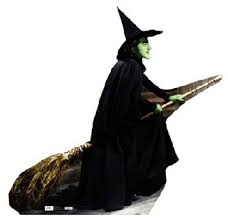
Pseudo-Kodinos, who told us about the Leopard-Wranglers, has a lot of entries on the skiadion. "The skiadion of the despot is entirely covered with pearls, on his aer (see the tails on Manuel's hat below) is his name in gold embroidery. . . . If [the despot is a young boy] he is on horseback, he wears the skiadion. When he becomes an adolescent, he wears the skiadion in the palace. . . the skiadia of the relatives of the emperor, who are despots, are red and gold, embroidered with gold thread, and have a cross embroidered with pearls. . . The skiadion of the sebastokrator is red and gold, embroidered with gold thread.  His aer is like that of the despot."   Headgear is not enough to distinguish rank at the Palaiologan court.  You need the full description of robes and colors, embroidery on robes, and colors of shoes to have any sense of security, but it does let you know that however poor the empire had become, there was full employment for the gold-embroiderers. The skiadion has been repurposed in the witch hat.
Update: one of my most faithful readers sent me another late 15th C image of skiadia, from the Istituto Ellenico in Venice. Emperors might have worn the skiadion in private, but in public performance -- at least in the West because that is where the images come from -- they wore the kamelaukion.  I don't know if the name refers to a camel's hump.  It is rounded and sectioned, rather like a melon, and is sometimes called a melon hat.  John's had jewels on top that could be changed.  To my knowledge, there is no Byzantine image of an Emperor in a kamelaukion, but the Westerners loved it and made images of Manuel II, John VIII, and Thomas Palaiologos.  This is Manuel, more or less -- his beard was white -- from the Tres Riches Heures of the Duc du Berry.
John's hats are more familiar, and he was more concerned about his personal style.
It is difficult to get good photographs of images of Thomas, but he is shown here from the tomb of Pius II who made a feeble effort to make him Emperor:
Western artists, when not painting visiting Palaiologoi, used the kamelaukion to represent "exotic person from Eastern country where they have better hats than us." 
There is only one Byzantine representation of a kamelaukion that I have been able to find, and I have given it an entry of its own, the portrait of Manuel Laskaris Chatzikis at Mistra.  There are, I think, exceptional reasons for this portrait, but you will have to read about them there.
Further update: the same reader found a miniature image of kamelaukia in the 14th-C manuscript of the Tale of Alexander in the Istituto Ellenico of Venice.  Here, even though by a Greek artist, they are used to identify exotic foreigners.  So it may not indicate Palaiologan use.

25 July 2009

Thomas Palaiologos

If this were a folktale, the youngest brother would end up with the princess, the throne, and live happily ever after. But even though the Palaiologue jewels and robes have appeared in one folktale or another for 600 years, the Palaiologos family did not live in a folk tale. Nor did any of them live happily ever after: the family simply unraveled.

The youngest Palaiologos brother, Thomas, is the most enigmatic of the brothers. The Italians who knew him in his last years noted his fine appearance, his dignity, his melancholy. Melancholia. Depression.

Depression is understandable, even normal: he had left the Morea in July 1460 with his family, pursued by Mehmed. He had not surrendered his Despotate or dowry lands, and he spent his last five years waiting on the kindness of strangers. Pius II was going to lead a crusade to retake the Morea and, ultimately, Constantinople, and make him the eastern emperor, but Pius died in August 1464, just before the crusade sailed, the crusade went wrong in the Morea almost immediately, and Thomas died in May 1465.

He moved into history at the age of 8, when he was shipped off to the Morea to join his brother Theodoros. It was normal practice for the Palaiologos family to hive off its sons very young. His introduction to Italy probably came a few years later through his brother's wife Cleope and her Italian companions, not to mention
a steady stream of Italians -- merchants, colonists, diplomats, curiosity-seekers -- I almost said, people like Cyriaco of Ancona, but there was no one like Cyriaco.

In his teens, Thomas joined his brothers, Theodoros and Constantine, in a series of small military campaigns to take over the non-Byzantine lands of the Morea. The campaign against the Principality of Achaia was settled when he was 21, with marriage to Catharine Zaccaria, daughter of the last Prince of Achaia, and more than a third of the Morea as dowry -- western Morea across to Karitena and down to Kalamata, Vostitsa nearly to Corinth, and the eastern Argolid. John sent an emissary from Constantinople to tell him that he had been awarded the title of Despot over Achaia. There seems to have been a pattern in the family of
formal titles coming with marriage, and like Theodoros, John and Constantine, he married a Latin woman in conformance with his father's strategy that marriage in the Latin church would bring Western aid.

We know of little he did in his role as Despot beyond signing the occasional grant of land. He lived primarily in Patras and Leondari. One account mentions his giving an order to have someone blinded. This may not tell us anything about him: it was normal Byzantine judicial practice and we know of a similar order from his brother John. A foreign writer commented that you saw a lot of mutilated people in Greece.

Despite his apparent affinity for things Italian, he did not go to Italy until his late 20s when his brother Constantine sent him with a message to John at Floremce, and Florence must have been overwhelming -- Brunelleschi's dome was half-way along, Fra Angelico was frescoing the convent of S. Marco where many of the Greek delegation were staying, the Gates of Paradise were dazzling in the summer sun. But this is a problem. We know of nothing Thomas did or sponsored in the Morea that would indicate he had seen or enjoyed Italy, or that he had learned anything there, and when he had to live in Italy, he was an outsider and a subject for art. He is reported to have had beautiful manners, but this was reported of most of his family.

He becomes more problematic after Constantine moved to Constantinople on the death of their brother John, and Demetrios was sent out to hold the position of Despot of Mistra. That is when the vocabulary comes in and one chronicler describes them as "those brothers who swallowed their oaths like cabbages," and another, "those brothers who ate each other's hearts." (These were quoted in the entry on Demetrios, but they are eminently quotable descriptions by people who knew them better than we do.) Demetrios was with reason jealous: Thomas had been in the Morea for nearly 32 years, he had acquaintances and alliances, and he would have liked the whole thing. Even though Demetrios was older he was the new boy.

After the Fall of the City the brothers were left flailing at each other, surrounded by revolts, needing Ottoman aid to maintain their titles, needing Venetian aid to balance off the Ottomans. Several of Thomas' followers offered their allegiance to Mehmed. Then after five years, Mehmed demanded the surrender of Constantine's cities -- Corinth, Patras, Kalavryta -- which Thomas held. They were formally surrendered on his behalf, but the next year he went to war with 300 soldiers sent from the west, and took Kalavryta and some few territories back. But he found that his followers were now ruling, not on his behalf, but were treating these lands as their personal conquests, and the 300 were were rampaging and out of control. He and Demetrios continued to tear at each other, encouraged by various archons who changed sides with the weather. What could any of them have thought would happen?

Inevitably, in 1460 Mehmed came into the Morea, took the surrender of Mistra and added Demetrios Palaiologos and his family to the numbers who traveled with his camp. He set out next for Leondari and Thomas, but Thomas worked his way south with his family.
He never surrendered. He took ship at Porto Junco/Pylos for Corfu where he left his family and went to Italy to obtain Papal assistance. He was dependent on others for his support, and while he shows up often enough in art, and even on the central doors of St. Peter's in Rome, he is essentially unknowable.

His last years were a litter of losses, failures, waiting, dependency -- all done with beautiful manners. Melancholia. His wife died on Corfu. He never saw his children again though he left detailed instructions for their education -- daughter as well as sons-- with his friend Cardinal Bessarion who became their guardian. He had no more knack for fatherhood than his own father who also suffered from melancholy.

He died on 12 May 1465, aged about 56.

28 May 2009

Better Than You Were Before

In the fall of 1454, Mehmed II sent a letter to thirteen archons of the Morea, accepting their offer of loyalty to him. They were "Kyr Manuel Rallis with all his people, and Kyr Sophianos with all his people, and Kyr Demetrios Laskaris with all his people, and the Diplovatatsoi, the Kavakioi, the Pagomenoi, the Frangopouloi, the Sgouromalaioi, and Mavropapas, the Philanthropenoi, and Petro Bua and his people, and those others who want to come."

All those plurals mean that each of the archons brought with him several dozen, maybe several hundred, more men, so this pledge of loyalty had the result of transferring several towns to Mehmed's service without effort on his part.

To them Mehmed promised: "of your possesions,
and your children, and your heads, and anything of your possessions that remain to you, I will touch nothing, but I will leave you in peace so that you are better than before."

After the Fall of Constantinople, which surprised no one even though it broke many hearts, the Morea disintegrated. The threat of disorder had always been there among the archons, and often happened, but at this point disorder was at every level of society and there was a general revolt -- "of the Albanians" -- the chronicles say, but Greeks revolted, too, and sometimes there were several sides revolting at once. Demetrios and Thomas Palaiologos, each ruler of half the Morea, fought each other, everyone changed sides and Mehmed was invited to send in troops to help pacify the country.
The Venetians saw the general disorder as their opportunity and sent in diplomats to offer gifts, and bribes to anyone where it might be considered used -- diplomats instructed not to put anything into writing. Once they saw how things were going with the Turkish troops, they focused their attention on Thomas, who liked Italians, and later on Demetrios, but neither would make a commitment.
Ever since the Fall, various archons and island rulers had been going to Mehmed, offering him homage, and welcoming him to their towns. By the fall of 1454, and given the revolts, the Morea was so totally hopeless that archons there were doing the same thing. There was a lot of it going around, but it is only these thirteen for whom we have a piece of paper.
Manuel Rallis, a brutal man and a palace official of Thomas Palaiologos, was in control of the area originally called Morea -- the territory of Chlemoutzi, Clarenza, the plain of Andravida. It formerly was controlled by George and Thomas Rallis, for Thomas Palaiologos, their first cousin, but at the Fall, they left for Italy. Just how Manuel was related, we don't know, but he now had that territory as well as his own and he had put it under Mehmed's control. He must have been quickly disillusioned: Mehmed did not tolerate the independence and rapaciousness the Palaiologoi were unable to control.

When Mehmed came into the Morea in 1460 -- and he took the surrender of Mistra from Demetrios Palaiologos on 29 May, the seventh anniversary of the Fall -- he brought people with him to whom he assigned lands. He used the same sort of leapfrogging method of land assignments my father and I used for turtles in the summer of 1950: find a turtle on the road, put it in the floor of the car. Next turtle is put in the car, and the first put out, and so on and so forth, four days from Minnesota to Texas, and four days Texas back to Minnesota.


The people Mehmed brought were the wealthy and powerful from his recent conquests. As he took up the Moreote archons into his train, he assigned their lands to Turks and Hungarians and Bosnians and Albanians, and a Russian. So the archons found their lands evaporating, and Manuel Rallis found his lands going to the sancak bey of the Morea, Sinan bin Elvan, and the Hizir-seraskier of Chlemoutsi. Petro Bua's territory went to an Ibrahim Engurus.
[Late correction: we do not know Petro Bua's territory for sure.]

This is probably why most of these archons were to be found fighting for the Venetians three years later when war broke out in the Morea in the summer of 1463. By 1465, Manuel Rallis, four of his sons, and a grandson had all been killed, some brutally. The lands he had claimed were now under his son Micheli whose people complained to the Venetians about his harshness.


In August 1466, Micheli Rallis was with the Venetian army when it was surprised outside Patras. The Venetian commander, Jacopo Barbarigo, fell off his mule when trying to escape, and Rallis, instead of making his own escape, stopped to help him. He was pointed out to the Turks by a priest. Barbarigo was cut to pieces. Rallis and the Metropolitan of Patras were impaled on the seashore.


About the others, we have little information. Petro Bua, his sons and grandsons, were fighting for Venice in the 1480s, and when he died at home in bed, the Venetian Senate heard speeches in his honor. A Sophianos served as an emissary for Mehmed to the West, but it may not have been this one. Some went to Crete, some to Italy, and more were absorbed, one way or another, into the Ottoman system. Some probably ended up administering lands in Albania or Thrace.


And for at least three generations, Venice, out of loyalty and gratitude, was providing employment and allowances and dowries for the desendants of Micheli Rallis and his brother Nicholas.


14 April 2009

Glory Days

In September or October of 1429, Despot Theodoros II wrote a poem to his parents, who are shown here in a manuscript portrait from about 1403. This is the earliest of three poems by Theodoros in the handwriting of Cardinal Bessarion and attributed to him, but the author was Theodoros. The third of these poems was discussed here.

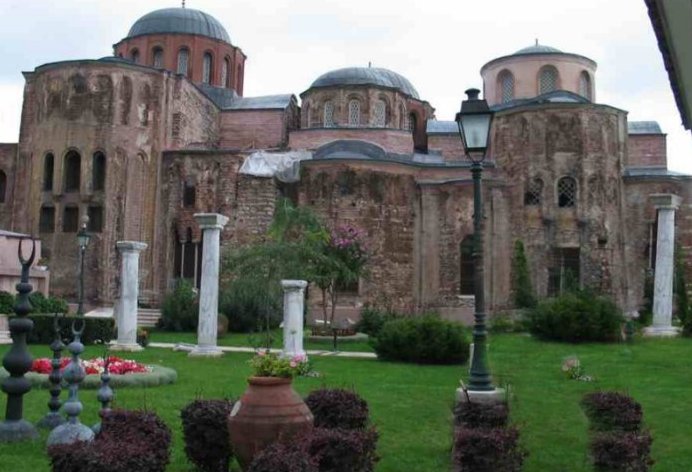
This autumn poem of Theodoros was to accompany an elaborately-embroidered panel with two double portraits of his parents, to cover their tomb, something like the Mistra fresco of his uncle Theodore.. His father, Manuel II, had died four years before and was buried in the Church of the Pantokrator in Constantinople (now Zeyrek Djami)..; his mother, Helena, had retired to a convent, which was almost like being dead except for the times she acted as regent

The panel was splendidly worked in gold -- Theodoros wrote, "I describe here in gold as being golden . . . with this torchlight" -- and very probably with pearls and other gems, something like this small portrait of his brother John and his bride, but larger, perhaps like this covering for an altar door. Six years later, a chronicle recorded that it had been sent to Constantinople, but whether Mistra was very short of workers with the needed skills, we cannot know. It might have taken a while to make the necessary gold thread -- Theodoros refers to the "gold hammerings showing what is within."


It is obvious from the poem that these were the glory days of the Despotate of Mistra. The brothers Palaiologos -- John, Theodoros, Constantine, and Thomas -- were at the top of their game, all accomplished without their father.


Theodoros' mood had reversed itself recovered from his own panic of the previous year about becoming a father, a panic that had made him desperately want to retreat to a monastery and left his wife and brothers at loose ends. Here he writes with pride of himself as "purple-born from admired stock" -- an awkward phrase, and continues:

Therefore you selected us, the children of your loins,
to rule the cleruchies of the Ausonians.
Theodoros is showing off his education here, but he had had a great deal of it: Ausonians was a literary way to refer to Italians, but cleruchies is more to the point, because it refers to lands held in another country. The brothers had, as of September 1429, acquired the Italian cleruchies in the Morea (except for a negligible amount of territory held by Venice), doubling both the territory and the income of the Despotate:

  • Constantine and Thomas had taken the city of Patras, long a private fief of a series of Italian archbishops, the last one Theodoros' brother-in-law.
  • The brothers had taken enough land from Carlo II Tocco that he could not continue holding on, and a marriage was arranged between his niece, Maddalena, and Constantine, with the great castles of Chlemoutsi and Clarenza as part of the dowry settlement. Maddalena, her name now changed to Theodora, was pregnant and due to give birth in the late fall.
  • The brothers had defeated Centurione Zaccaria, Prince of Achaia, and the settlement of that war was a marriage arrangement between the youngest brother, Thomas, and Katharina Asanina Zaccaria, with the lands of Achaia as part of the dowry settlement.
So there was a great deal in the way of cleruchies for the brothers to celebrate and money to pay for gold and pearls and skilled embroiderers. Gold runs through the poem to describe the moral qualities of Manuel and Helena:

Each of us in different ways, and I joyfully
honoring you with these fine-worked fabrics,
so may you extending your hands from above
through many days guarding the strengths of empire,
appear as defender, foundation, and power.

A gracious tribute, and it makes one wonder exactly how Manuel was portrayed. It suggests he might have been shown in armor and, if so, this is exceptional: when Byzantine rulers are portrayed with their wives, they both wear court dress. Was he shown somewhat in the position of the Virgin and Child in the image here, with his wife below?
Then the poem shifts to the images of Manuel and Helena wearing monastic dress, "the dark, black cloths of shrouds." It was very common, particularly in that family, for individuals to retire to a monastery or convent, partly out of religious devotion and discipline, partly because it was a congenial retirement and nursing home. Theodoros makes the point, and then says again, that his parents rejected earthly desires out of pure rationality. The embroidery must indicate that they are praying for their children:
she, near at hand with words of intercession he in with prayers on high showing us, your dearly loved, the way where one must lead.
The brothers Palaiologos must have regarded the prayers of their mother quite seriously, and we learn later, after the Document of Union of 1439 that she refused to pray for her son John who signed the document, and then when Constantine came to the throne in late 1448, accepting Union, she refused to pray for him. This was all in the future, though, and this poem is a powerful tribute from Theodoros who had not seen his mother for twenty-two years, because he had been sent to the Morea at the age of 10 to learn from his dying uncle how to be a Despot.  
  More research has found information which requires a shifting of the dates mentioned here.  This will be included in a forthcoming scholarly discussion of this and the other poems, jointly authored with Pierre A. MacKay. Translation Pierre A. MacKay and DW.    
Continue "Glory Days" with "The Palace of Mistra."