23 October 2013

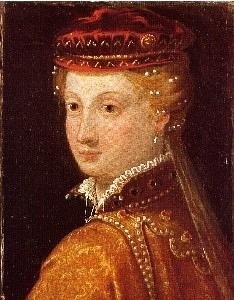
Remember the slaves, especially Margherita


Detail, Giovanni Bellini, Miracle of the Cross, 1500.

It is difficult to find pictures of slaves who are not black.  A hundred years after the documents in this blog, the European image of slaves was of a black African, but in the 14th and early 15th centuries, slaves were more likely to have been white -- Slavs, Greeks, Circassians, Tatars.  It is disconcerting to discover in Sally McKee's *** collection of Cretan wills that Greeks, and Greek priests, owned Greek slaves.

Almost nothing has survived from the Morea about slaves in the Byzantine-Franish-Venetian period, and what has survived has come from Methoni and Koroni.  Slaves were probably statistically insignificant in the Morea, but it is disturbing to see what a matter-of-fact process was the sale and purchase of a slave.  Most of them had been stripped of their identity by being baptizes and given a new, "Christian," name, yet in some cases someone was careful to make a record of the former name.A few names appear several times, both purchasers and slaves.  Some of the slaves here would end up in Venice.

There is not enough information to understand the prices, though  Greeks were usually the least expensive slaves. Only one of the then slaves here is a male.  The females were all wanted as "house" slaves, and whatever their other duties, would have been cooking and scrubbing and hauling water.  Studies of Mediterranean slavery have shown that buyers rarely wanted to introduce a male into the intimacy of a household.


  • 1372. Alvise de Tinto, resident of Methoni, sells to Luca de Albrigo of Venice, now living in Methoni, a female slave, formerly a Tatar, of sound body, about 28, named Lucia, for 30 gold ducats.
  • 1372. Pietro Bianco, tailor, resident of Methoni, sells to Francesco de Galvano, soldier in Methoni, a male slave, Tatar, about 20, named Cotulloga, for 25 gold ducats.
  • 1372. Lorenzo of Ancona, merchant, resident of Methoni, sells to Nicolo Montanari, resident of Methoni, a female slave, Tatar, about 20, baptized Bona, for 28 gold ducats.
  • 1373. Catellano Trevisan, resident of Methoni, sells Antonio Romano, resident of Koroni, a female slave, about 16, Tatar, baptized Zana, healthy and of sound body, virtuous, for 100 hyperpera.
  • 1374. Zualle Zuliano, resident of Koroni, sells a female slave whom he bought in Candia, Tatar, named Guthlugus, now baptized Maria, of sound body, to Luca de Albrigo of Venice, now present in Koroni, for 24 gold ducats.
  • 1374. Giorgio Strovilli, resident of Koroni, sells ser Manfredo de Botis, resident of Koroni, a female slave, Kali, Greek, about 14, for 22 gold ducats.
  • 1374. Giovanni Bon of Venice, now in Koroni, sells Nicolo Viaro of Venice, now present in Koroni, a female slave, Tatar, now baptized * * *, about 13, of sound body, for 27 gold ducats.
  • 1374. Pietro Bon of Venice, resident of Methoni, sells to Gerata, widow of Giacomelli Zanetti, now resident of Methoni, a female slave, Tatar, about 24, named Dierormuo, now baptized Agnese, for 30 gold ducats.
I don't find a document that tells me how Bon got Dieromuo back, but:
  • 1374. Pietro Bon of Venice, resident of Methoni, sells to Paulo Bitturi of Benice, resident of Methoni, a female slave, Tatar, about 24, named Dierormuo, now baptized Agnese, for 31 gold ducats.
The next pair of documents give a warm feeling, until you read a further document and discover that Enrico bought a new, younger, slave girl.
  • 1373 (16/9). Enrico Barbarigo of Venice, now resident of Methoni, makes you, Caterina, Tatar, my slave, free.  No one can hold you in servitude, but you will be recorded as free. Your present children and those to be born of you will remain free and in permanent liberty.
  • 1373 (16/9). Giovanni Rigi of Lucca, now resident of Methoni, with my heirs, give a receipt to Caterina, my beloved wife, servant of Enrico Barbarigo, for her dowry of 200 lire di denari piccoli.  You will remain secure and quiet in perpetuity.
  • 1373 (18/9). Zanobio of Florence, now resident of Methoni, sells to Enrico Barvarigo of Venice, now resident of Methoni, a female slave, Tatar, about 12, baptized Margherita.


Source: Documenta Veneta: Coroni & Methoni Rogata, Vol. 1. Andrea Nanetti (Athens, 1999).

Vade, Sta, Ambulent: my article on freeing slaves in Crete.

*** Sally McKee has a number of articles on Cretan and Mediterranean slavery.


16 October 2013

Methoni: The marketplace


Lotto, St. Barbara, detail.

Last week, Surprised by Time looked at some of the laws in Methoni intended to maintain peace and quiet. More laws concern details of the marketplace. Monetary equivalents:*
                            1 ducat          = 130 (1424) - 175 (1457) soldi
                            1 soldo           = 4 tornesi/torneselli
                            1 hyperperon = 20 soldi/80 tornesi
                            300 soldi       = month's wages for a soldier or sailor
  • 1416. Anyone who sells wine at an eating house will pay 30 hyperpera for each offense and will stay 2 months in prison and 1 day in the pillory, if a man, and if a women in place of the pillory will be led through the castello with the wine jug hanging from her neck and her offense cried out before her. If anyone is found carrying a jug or other container of wine, and the tax collector asks about it, and the said person pours it on the ground, he will pay 10 hyperpera, half to the tax collector and half to the commune.
  • 1416. There are two ships here that will go to Flanders, and they want to buy corloti (a wine). No one is permitted to sell them corloti: experience has shown it does not travel well, and it will do great damage to Venice and this territory. Anyone who sells them corloti will spend a year in prison and pay 1/2 ducat for each offense. Anyone who sells corloti to anyone not from this territory, without a license from and the knowledge of the castellan, will suffer the same penalty.
  • 1416. It is permitted to anyone who has herd animals (mandra) to kill young goats, sheep, pigs, and other animals for the use of his household, without paying a tax. Similarly, anyone who raises pigs in his house and kills them will not pay a tax.
  • 1417. Anyone who transports wine out to the casali or anywhere in the territory without paying the tax will pay a penalty of 10 hyperpera, and double the tax. From the penalty one-third will go to the commune, one-third to the tax collector, and one third to the accuser. If the accuser is the tax collector, he will have one of the two-thirds.
  • 1417. No one of any rank can buy greens or fruit in the terra (Methoni) except at the produce market at the column of the piazza, with a penalty of 1 hyperper for each offense and confiscation of the purchase. Also, no one may presume to put a hand in the sack of the seller of the produce or take any produce against his will, with the same penalty. [This had also been made a law in 1344.]
  • 1428. No one of any rank may sell any quantity of grain, small or large, to any seller of bread without a license from the castellan, under penalty of losing the grain and the price of it. No seller of bread may buy any quantity of grain without a license from the castellan, under penalty of losing the grain, and the value of it, and one day in the pillory.

Lotto, St. Barbara, detail.

  • 1432. Anyone, either man or woman, who sells greens at 1 soldo a bunch, that is pozi, cabbage, (horse)radishes, zevole, pastonagie, or other vegetables, from here on will sell for 1 tornese a bunch, under penalty of 5 hyperpera.
  • 1440. No one may sell tallow candles except at the price of 5 soldi the pound, with 24 candles in a pound, under penalty of 20 soldi. [A pound = 301g. or 66% of a modern pound.]
  • 1440. No one may salt pork, either in the fortification or the borgo or the district, without a license from the castellan. It is permitted to each person to salt for household use one or two pigs, or as much meat as would equal two pigs, and no more.
  • 1444. No one should play any game of chance except in the loggias and porticos of the shops of the castello to the corner of the Memo house. There are those who play between the two gates and blaspheme God and the saints, and distract the guard, and they come to words and draw arms to the great danger of the guard. It is decreed that from here on no member of the guard can play any game of chance for any reason at the gate of the castello, if not in the loggias and porticos of the shops as far as the corner of the Memo house, under penalty of 40 soldi for each offense. This applies to the night guard as well.
Wartime affected market regulations.
  • 1468. No one of any rank can take or send out of this city or borgo or district or casali of this district, any grain, wine, oil, or food, without a license from the rettori given in writing at the chancery, under penalty of losing it all, or the value, as contraband, 1/3 to go to the commune, and 2/3 to the accuser and the rettori.
  • 1469. At present fish dealers have multiplied in this land who sell fish at a higher price than customary to the detriment of everyone. No one of any rank will sell a pound of fresh fish for more than 4 soldi, and little fish and bobe/pogue/gopa for more than 3 soldi a pound, under penalty of 5 hyperpera for each offence. 

* Money from Alan M. Stahl, The Venetian Tornesello: A Medieval Colonial Coinage, 1985.

Pictures from the fresco by Lorenzo Lotto, The Legend of St. Barbara, 1523-24, in the Oratorio Suardi, Trescore.


09 October 2013

Methoni: Law and order


Column in the central plateia of Methoni wher
all  announcements were made, public
justice enacted, and the main market held.


Volume 4  of Sathas has a wonderful collection of laws and market regulations for Venetian Methoni. Laws were produced when there were problems to be solved. Some were produced locally, by the governor and his advisors, some were produced in Venice. New laws were announced by the gastaldo (and a trumpet) in Venetian-Italian and Greek at the column in the central plateia -- which still stands, as well as at the land and sea gates, and at other relevant locations.  Very similar laws were in effect at Koroni, though not always the same, and at Nauplion. Some monetary equivalents:
                            1 ducat          = 130 (1424) - 175 (1457) soldi
                            1 soldo           = 4 tornesi/torneselli
                            1 hyperperon = 20 soldi/80 tornesi
                            300 soldi       = month's wages for a soldier or sailor
  • It has been noticed that spicers and other shops in Methoni sell risigal and arsenic indiscriminately to anyone who wishes to buy. It might happen that one might be poisoned by his wife and die.  To avoid such errors, no one will sell risigal, arsenic, or other poisonous substances without a prescription and the knowledge of the paid city doctors.  If anyone does so, he will stay in prison for one full year, without remission.
  • 1415. The Honorable Castellan of Koroni and Methoni, misser Marco Dandolo, orders that from now on no one should throw, or cause to be thrown, garbage or night soil into the port of Methoni inside the breakwater, under penalty of 10 hyperpera for each offense, half to go to the accuser.
  • 1416. It has been noticed that there are many errors in the cadaster with people not declaring what they should. It is ordered that within the next 8 days, all the householders in the casali 1of this territory, whatever their class, should declare the residents in their house, and who has been born, or died, or fled, or returned, or come to stay, under penalty of 10 hyperpera for each omission, half to go to the accusor. Also they are to report their animals, whether bull or cow or mule, or if one has died. For a second offense they will pay another 10 hyperpera, and their hair and beard cut off, and put in the stocks. For a third offence, another 10 hyperpera, and they are to be branded three times with the seal of S. Marco.
  • 1426. It has been noticed that horses are being brought into the territories of Koroni and Methoni by Greeks, Albanians, and Serbs, and by people from the Greek territories, and from the Principality. They are sold to our people with the result of all kinds of errors. From here on, a Greek or Albanian or Serb or anyone else who wants to sell or buy a horse has to prove to the castellans where he got the horse.
  • 1427. It is noticed that there are those who do not obey the commands of the Lords Castellans and presume to come and go outside the borgo by way of the enclosure at the house of ser Jacomo da Pesaro to the shore. From here on, anyone who does will pay a fine of 10 hyperpera for each offense. If he cannot pay the 10 hyperpera, he will receive 25 lashes at the column. No person, whether soldier or citizen of the territory, of whatever rank, can carry outside the borgo of Methoni, either by land or sea, any crossbow without the permission of missier the Castellan, under penalty of losing the crossbow which will become the property of the commune. The accuser will have half of the value of the crossbow.
  • 1436.  It is noticed that there are soldiers and landworkers who leave Methoni illegally without orders and without permission.  Missier Piero Zen, honorable castellan of Methoni and Koroni declares that any soldier or landworker who leaves without permission, from here on, will stay in prison for six months straight, and pay 100 hyperpera to the commune, and then will be banned from Methoni and Koroni without pay.
  • 1458. It has been noticed that there have been frequent break-ins and escapes from the prison, counter to the dignity of our authority.  Anyone who gives any aid to an escape, or who provides tools or picklocks (grimaldelli), or breaks into, or helps to break into the prison will pay 25 hyperpera for each offense, and will stay one month in prison. 
With Methoni as the primary port for disembarking troops for the Peloponnesian war in the 1460s and 70s, there is a sequence of laws concerned with weapons, noise, and the inevitable violence. The last of the three included here reflects despair over the harshness of Venetian taxes, & the continual raids on farms by continually unpaid soldiers.2
  • 1464. Presumptuous individuals who have no shame go at night and offend newly-weds verbally, and with horns and drums, with a chivaree (zaravarini). The Doge Lorenzo Loredan, and the captain and provveditor Benedetto Gritti, declare that as of the second hour of night (about 8 PM) no one will bear arms, and no one will have a chivaree day or night.
  • 1467. Presumptuous individuals bear arms in the piazza, market, and between the city gates, and they do the same at night. The rettori and provveditori order and declare that anyone who bears arms against anyone between the gates, market, and piazza from the house of the late Ser Nicolò Tinto3 as far as the palazzo will pay 200 hyperpera for each offense, and if he cannot pay he will be whipped from the piazza to the mole.4 Anyone who does this at night, in the city or the borgo5 will be imprisoned for 3 months.
  • 1469. It has been recognized that some individuals through malice have set fire to their fields or vines or trees, with the greatest damage to this city. Anyone of any rank who dares to do this without the express permission of the rettori will pay a penalty of 200 hyperpera (with half to the accuser and) and stay six months in prison. If he cannot pay he will be whipped and put in prison. 1480. The hand that set the fire will be cut off.
This last law was an attempt to stabilize the Methoni food supply. Taxes on produce and sales were important, but the real issue was food. Because of the war, the soldiers who needed to be fed and who looted, and the recent two years of plague with the loss of so many farm hands, Methoni was constantly on the brink of starvation.
  • 1478. Anyone of any rank who brings into his house a female slave or servant for carnal purposes will pay a penalty of 100 hyperpera and will stay 4 months in prison. Any female slave or servant who brings a man into her master's house for such purposes will be whipped from the harbor gate to the piazza.

Next week, Surprised by Time will look at some of the laws of the Methoni marketplace.


1  Casali: villages on landholdings.
2  In 1465, provveditor Jacopo Barbarigo had written of his embarrassment at not being able to control his         soldiers looting, because they weren’t being paid.
3  I have no idea who Ser Nicolò Tinto was, but apparently his house was quite prominent.
4  The mole led from the harbour gate to the little island tower
5  Borgo: the city outside the fortifications.


02 October 2013

Air erodes feathers

Primary feathers from left and right wings, thinner on the fore-edge.
Erosion is evident on both edges.

From July on, the crows are in moult, even the ones that hatched out in the summer. The feathers that grew in beginning last July work their way out, and new feathers grow. There is a period of more than two months when crows lose their glossy black and become not just a drab brown, but because of the feathers coming out and the feathers coming in, they look like a medieval band of lepers. This is when you see bits of their insulating undercoat made up of little fluffy grey feathers.

Crow at the worst stage of moult.

Air -- and sunlight -- erodes feathers. The brilliant black that sometimes flashes blue and purple in the right angle of light is a matter of refraction, not only of melanins. During the year the structure of the feathers that refracts the gloss wears down, and at the end of summer crows show the underlying pigments. 


Not all of our crows are evenly-pigmented.  The Korax family has patches of lighter-colored feathers all year around, some of them with a light ring around the neck. They are not discriminated against by the black crows.


The fore-edges of the wings gradually deteriorate.  Brushing against the nest, or tree branches and telephone poles, or other crows, wears down feathers. If you want to see nearly perfect feathers, go to this site created by the US Fish and Wildlife Service where you can identify most of the individual feathers from 100+ species of birds. 


It is illegal to possess these feathers.  I brought them inside to scan, and then returned them to the outdoors, to the crow shrine.  We have a place on the edge of the yard where we put odd things dug up in the course of gardening -- strange-shaped rocks, enormous nails used for railroad ties, crow feathers. Passers-by sometimes take the stones, never the feathers. As far as I can tell, when the crows eat cracked corn beside the feathers, they never notice them.  

I am fascinated by the evidence of the seasons, something I take for granted with the trees, with the plants in the garden. When the chlorophyll in leaves breaks down at the end of summer, we see the underlying carotene and anthocyanin pigments. Until this year, I had never made the connection across the species between the change of leaf color, and the change of crow color, between shedding leaves, and shedding feathers.  But that analogy goes only so far.  One of the Korax family came up to the car when I drove into the driveway this afternoon, and I saw the glossy black of the new feathers, not fully grown out.


25 September 2013

Two stratioti portraits

(Stratiote)
Male profile bust, 1477-1491, V& A, London. 48 x 47 cm.


One of my correspondents, Pavlos Plessas, sent me these remarkable portraits of stratioti. They, and four others, are in the Victoria & Albert Museum in London.  The V & A considers the subjects unknown, as is the artist or artists, but I think we can come very close to identifying the stratioti. First, some background.

Twelve more are in the Metropolitan Museum of Art in New York.  These 18 are from a sequence of at least forty-four panels sold off in 1881/2 from the castle of San Martino Gusnago -- 32 k from Mantua if you are driving. Two panels are in the Cornell Fine Arts Museum in Florida, the rest are -- or were -- in private collections. The latest date for a whereabouts of one that I have been able to find is 1991.

The castle of San Martino Gusnago belonged to, and was built by the condottiero Francesco Secco d' Aragona  who was married to Caterina, daughter of Ludovico III Gonzaga of Mantua. Caterina was the great-granddaughter of Malatesta "dei Sonetti" Malatesta and the granddaughter of Paola Malatesta, sister of Cleofe Malatesta Palaiologina who has been the focus of so many entries here.  Secco and Caterina named their own daughter Paola.

Secco moved in the best circles.  His architect, Luca Fancelli, worked with Leon Battista Alberti.  He had the best employers -- the Duke of Milan, the Marchese of Mantua, the Doge of Venice -- and in 1477 was given the right to use the name and arms of the kingdom of Aragon.  He survived the battle of Fornovo in 1495 at the age of 72 but the next year he was killed by a shot from a crossbow.  

The V &  A dates their panels to 1477-1491 and consider them Secco's responsibility.  In 1491 Secco's properties were confiscated by Francesco II of Mantua because he was negotiating to work for Lorenzo di Medici.  Francesco gave the castle, or palazzo, to Eusebio Malatesta, his Jewish advisor.  The MMA dates their panels to 1500-1515 and considers them Malatesta's.  I don't think anyone has suggested that Secco commissioned some, and that after he was ousted Malatesta continued the series.  Several of the MMA panels have very suggestive Jewish elements.  The panels originally appear to have been in two facing groups on either side of a large beam that divided the ceiling of the hall where they were placed, eleven facing eleven in four rows.  The four central portraits looked straight ahead, while those on either side faced the center.

I identify these two portraits as stratioti, because of the distinctive hats, and the beards.  Greeks wore beards in that period, Italians generally were clean-shaven.  These are the only two beards in the eighteen portraits from the V & A, and the MMA. The stratiote above, in cloth-of-gold, seems to have the rank of a knight of San Marco.  Knights of San Marco were most often non-Venetian.  They were invested by the Doge, and given a gold robe. You can see one in the center of the bridge in Gentile Bellini's Miracle of the True Cross although it is difficult to make out any details of tailoring to compare with this portrait.

In September 1480, Krokodylos Kladas, Theodoros Palaiologos, and Micheli Rallis Drimis were invested as knights. Piero Busichi was also a knight, as were his brothers, Mexi and Dima. Mati Clemendi was a knight. That makes seven knights. There may have been other kapetanioi who were knights, but these are the names we have for the early 1480s.  Possibly more would have been created after the Ferrara War.  I want to be very cautious here, but I doubt that the list of Greek and Albanian knights of San Marco between 1477 and 1491 would be very long.  


The stratiote in the portrait below is wearing red -- we have a number of mentions of Venice giving red cloth to selected kapetanioi.  

( Stratiote)
Male profile bust, 1477-1491, V & A, London. 48 by 47 cm.

Here I am pushing -- and I want to emphasize the almost complete lack of information, or evidence -- but this picture reminds me powerfully of the Pisanello drawing of John VIII in Florence, most particularly the set of the eyes and the shape of the nose.  

John VIII. Pisanello, 1439. 25.8 X 19 cm.
Louvre, Departement des Arts Graphiques, 2478.


The stratiote appears to be a slight man, as we know John and Manuel were. Palaiologoi were kapetanioi for Venice in the period in question, and after. We have no solid proof of the relationships of any of them to John, Constantine, and Theodoros, but my colleague Ersie Burke and I think there is some evidence that allows us to say they were descended from Theodoros I Palaiologos.  Not enough evidence to be absolute, but some.  

I will take this a little further.  I have been struck by the particular striped design on the robe over the red fabric.  It reminds me of Ottoman design, so I asked an Ottoman art historian for his reaction.  He said, "It looks a bit like the wave pattern of the cintamani motif: tiger stripes and leopard dots (last is missing)." (Might the dots, or balls, have been too reminiscent of the Medici to be thought politic -- if it is supposed to indicate Ottoman fabric?)


Theodoros Palaiologos, knighted with Kladas, had -- like Kladas -- given allegiance to Mehmed II in 1460 and had received more lands.  When he came over to the Venetians in 1478 they noted that he had been highly regarded by the pasha of the Morea, and decided to send him and his company to fight in Friuli.  So there is an immediate Palaiologos-Ottoman-stratioti connection.  But not enough proof to identify this portrait.

There is another possible Palaiologos connection. Andreas Palaiologos, Thomas' son and John's nephew, seems to have been with Kladas in an effort to establish Skanderbeg's son in Albania in 1481, under the sponsorship of Ferdinand I of Naples who gave Franceso Secco the arms of Aragon in 1477. And there may have been another Palaiologos or two.

That is all that can be said here about identities -- there are teasingly close links: no solid evidence, no proofs.

If someone is looking for a dissertation topic in art history, I would like to offer these panels.  I will not have time in my life to follow up on the present locations, and images, of the other twenty-four panels, but I suspect that, seen collectively the forty-four would provide much more information about identities. (The only reasonably sure identification that has been made is that of Doge Marco Barbarigo in the MMA set.)  Archival work needs to be done to find the panels listed in private collections.

I hope readers will have more information to contribute.


18 September 2013

The Twins


I have been accompanying the Book of Ceremonies with the pictures from the Skylitzes Chronicle (download it here).  Admittedly, they were taken out of context, but they nicely illustrate the text even if painted much later.


I came across these pictures of conjoined twins Skylitzes, and immediately wrote John Burke in Melbourne to find out what is going on. John knows more about Skylitzes than just about anyone ever. John sent back this:

From Wortley's translation:
"In those days a monstrous thing came to the imperial city from Armenia: a pair of Siamese twins, males sharing a single belly, but they were driven out of the city as an evil portent. Then they came back in the [sole] reign of Constantine [VII]. When one of the twins died, some experienced doctors tried to excise the dead portion -- and they were successful, but the living twin survived only a short while and then died." 

Leo the Deacon (Talbot-Sullivan translation) offers a little more, though they may be  different  twins:
"At this time male twins, who came from the region of Cappadocia, were wandering through many parts of the Roman Empire: I myself, who am writing these lines, have often seen them in Asia, a monstrous and novel wonder.  For the [various] parts of their bodies were whole and complete, but their sides were attached from the armpit to the hip, uniting their bodies and combining them into one.  And with their adjacent arms they embraced each other's necks, and in the others they carried staffs, on which they supported themselves as they walked.  They were thirty years old and well developed physically, appearing youthful and vigorous.  On long journeys they used to ride on a mule, sitting [sideways] on the saddle in the female fashion, and they had indescribably sweet and good dispositions.  But enough about this."


11 September 2013

Ceremonies, Part Two


Court attendants waiting.

As I read the 10th C  Book of Ceremonies, the main emphases are dress and waiting. And interior decorating, which is dress for the buildings. The palace had great stores of formal dress.  Special outfits were brought out for people to wear when they were being invested in an office, and then were put back in storage.  It may be unfair of me to mention that Liutprand of Cremona and  Ibn Hauqal, both of the 10th century, thought they were seeing a lot of hand-me-downs.
The emperor hands [the new rector] a tunic which is called a rector's tunic.  Note that the praipositos hands the emperor the tunic.  This is of white damask with a fine phialion woven with gold, with an extension about four fingers wide extending a little over the shoulders, along with fine cuffs woven with gold, and a border woven with gold.  . . .  and the emperor hands him the gold-bordered cloak . . . Then the emperor hands him a reddish-purple maphorion with roses embroidered in pure gold all over it like lupins. Note that the praipositos hands the emperor both the cloak and the maphorion.  This maphorion is worn once, and only once at the appointment.
At banquets, guests and the poor and foreign visitors (except for Bulgarians)  were handed robes to wear, and when the banquet was over, the robes were taken away. Here is a fairly extensive description of the clothing and the interior decorating for a "reception" given by Constantine Porphyrogennetos in 946 AD. For these major events, things were brought from monasteries all over the city, or moved from other rooms in the palace. 

More court attendants waiting.

. . . polished bronze chans from the Monastery of Sts Servios and Bakchos were hung in the great Hall of the Magnaura . . . on these chains were hung the great silver polykandela from the New hurch . . . on the right-hand side between the great columns, stood the gold organ, outside the curtains, and beyond it as one faces east the silver organ of the Blue faction and likewise on the left-hand side the silver organ of the Green. . .           Note that the decorators made the whole pergola like an arcade with sendals and to either side of the columns . . . were hung great skaramangia which had been issued by the palace.           Note that when the Spaniards came a reception was held in all respects like this one, except that the pergola was not decorated with sendals but entirely with great Skaramangia, and the Phylax's enamelled objects were also hung in it. . . .          Note that the eparch fitted out the area outside the Stable of the Mules, and the First Schole, on either side, with silks and cloths and sendals and with the chased silver objects stored in the hospices and old-people's homes and the churches . . . the eparch fitted out the Tribunal with silks and cloths and sendals and with objects of gold and enamel and chased silver -- that is to say, the silver-dealer supplied these. . .          Note that the hall where the baldachin stands . . . and what is called the Onopodion were fitted out by the sakellarios with silks and curtains from the Chrysotriklinos.          Note that the portico of the Hall of the Augousteus . . . was fitted out with the reddish-purple curtains from the Chrysotriklinos.          Note that the passageways from the Hall of the Augousteus . . . were fitted out with various embroidered curtains.          Note that, as usual for processions, the passageways were trimmed with laurel in the forms of little crosses and wreaths . . . They were also trimmed with the rest of the flowers which the season provided then.  Their pavements were liberally strewn with ivy and laurel, and the more special ones with myrtle and rosemary.  


 It goes on for pages and pages with the lists of officials and what they are to be wearing and where they are to stand -- "the archons' sons wearing their skaramangia and swords, the valets dark-coloured chlamyses, and the stewards of the table short-sleeved tunics of sham reddish-purple." "Sailors stood to either side at the Hall of the Scholai, carrying leather shields and wearing their swords."  Meanwhile, in the Crysotriklinos there were the most extraordinary embroideries hanging about:
. . . the chlamyses of the emperor and the augousta, from the Chapel of St. Peter . . . entirely of gold with a plane-tree in pearls; from the Chapel of St Theodore the chorosanchorion with the griffin and lion; from the dining-room, the plane-tree chlamys of silk of three hues; from the Pantheon, the horseman chlamys; from the vault of the dining-room, the peacock chlamys, the mantle of the augousta; . . . the horseman chlamys . . . from the silver doors to the west, the little peacock chlamys, and the eagle chlamys . . .   Note that the imperial crowns and enamelled objects were hung alternately . . . three imperial crowns . . . the green crown from the Church of the glorious Holy Apostles . . . the blue crown . . .
I have not got to the silver plates suspended between the columns, or the great white crown the emperor was wearing, or how to manage if a winter storm was blowing, and there is no mention of what they were actually eating at these dinners and receptions.
 Note the emperor's little gold table.
After the emperor stood up from the banquet there was dessert in the dining room.  The small gold table stood there . . . and the dessert was placed on it on enamelled plates decorated with precious stones. The emperor was seated, and Romanos the purple-born emperor and their purple-born children, and the daughter-in-law and the archontissa [of Russia].  500 miliaresia were given to the archontissa [of Russia]  on a gold plate decorated with precious stones, and 20 miliaresia each to her six female relatives, and 8 miliaresia each to her eighteen female attendants.
  have miliaresea.  They are very large coins, but I have no idea of their purchasing power, or if the archontissa of Russia was able to keep the gold plate decorated with precious stones.But is is nice to see an overwhemingly female delegation to an overwhelmingly male court.

Theophilos visiting the Blachernai.  Notice his trouser suit covered with pearls.

A great many entries in the Book of Ceremonies begin "if the emperor wishes" but underlying that is the sense that what the emperor wishes maywell be irrelevant.  He is going to have to perform that ceremony whether he wishes or not, and some may not have liked the ceremonial business nearly as much as did Constantine Porphyrogennetos.
If the emperor wishes to go away and keep the vigil at Blachernai, he goes one day before and observes the vigil. On the following day, that is, the day of the feast, they all go along in ceremonial dress while it is still dark, the magistroi and praipositoi, patricians and holders of high office. the eunuch protospatharioi are in their ceremonial dress and carry sword-tipped batons, and the household protospatharioi are in spekia, and all the rest, except for the officials of the bureaux, are in skaramangia.  They all go along to the hall which is called the Hall of The Danube and sit there.

The emperor in his dromon.  Notice the wind-blown hair.

If it is not a fine day, he goes on horseback and goes in his skaramangion, but if it is a fine day he goes by boat. All the senate sit in skaramangia outside . . . waiting on the shore for the emperor.   . . . The magistroi and patricians and all the senate sit in the Hall of the Danube, and they change into their ceremonial dress and sit there waiting for the time to come.
They also had baths at Blachernai. This was a ceremonial event --  they had their regular baths at the palace, as witnesses this image of the murder of Romanos III:


Romanos III (d. 1034)was either murdered in his bath,
or poisoned, on the orders of his wife. Note the worried bathers
waiting outside in their towels.
 A murder at the Blachernae baths would have had to involve a huge crowd of conspirators, beginning with the Senate.
Early on Friday morning the whole senate goes along in skaramangia to Blachernai . . . The rulers, in their skaramangia, go onto the dromon with their personal staff and the logothete of the post and the chief imperial secretary and the officer in charge of petitions and the hetaireiarches and the droungarios of the Watch . . .
There is a change of clothes for the rulers, a visit to more than one altar, activities with candles and peacock feathers and more robes, and if the rulers wish they put on their crowns.  Then they go up a spiral staircase to the dressing rooms while the hetaireia pray. [I am shortening this extremely. The hetaireia are not women.]
The rulers go away to the dressing-rooms and, after undressing, put on their gold linen  garments and go in to the holy bath. [After an involved process with candles, icons, and incense] the rulers with their own hands make the sigh of the cross over themselves and go out and bathe.  After the bathing they go out into the small outer tholos and take off their linen garments and put on other woven with gold.  The protembatarios stands in front of the bath and says the prayer.   Note that while the prayer is being said the bath attendants lead in the twelve water-bearers from the left-hand side of the bath, and they go through in front of the eastern conch down there and stand to the right-hand side of the bath.  Entering, the rulers stand and the senior emperor hands each of the water-bearers one nomisma each.  It is necessary that the praipositos prepare in advance the hand of the water-bearer for the reception of the imperial gift. . . . If the rulers wish to go on horseback and go away either to the spring or elsewhere, they do so; but if not, they go onto the dromon and go to the Palace, or indeed they go away wherever else they wish.


04 September 2013

Ceremonies, Part One

Nikephoros III Botaniates, 1078-1081,
(updated from a portrait of Michael VII Doukas, 1067-1078)


I have been rejoicing in the new English translation by Ann Moffatt and Maxeme Tall of The Book of Ceremonies published by the Australian Association of Byzantine Studies -- splendid commentary, footnotes, explanations.  I have always been enthralled by lists -- priamels, the Biblical begats, the Catalogue of Ships, the contents of almost anything by Sir Thomas Browne -- and this is the ultimate collection of lists. Everything in the list of lists is gold-plated, littered with precious stones and pearls, hung with gold-woven draperies, and jammed with dignitaries who get up before dawn to stand and wait.

It dates from more than a century before the image above, from Constantine VII who compiled and edited it from much older documents, adding bits of his own. Constantine, also called Porphyrogennetos, is one of the most interesting, literate, and competent, of all the emperors, and I want to emphasize -- in the light of all the gold that glisters through the ceremonies -- that he left the empire off better financially than it had been in at least a century. 

Someone needs to try to map out on a calendar how much time an emperor of the middle-Byzantine period spent in a normal week [non-Holy Week, non-Russian-visitor week] in performing ceremonies.  The imperial capacity for tedium is astounding.  Take this passage describing acclamations in the Forum of Constantine for a triumph:

The demesmen of the two factions [in the picture above, the men in blue and green at the top] and the members of the arithmos and the oarsmen of the imperial crew and the church singers stand . . . on the small flight of stone steps there, and . . . they begin to cheer . . .: "Many years for the emperors!" three times. "Many years for so-and-so and so-and-so, great emperors and sovereigns!" three times.  "Many years for the divinely-appointed emperors!" three times.  "Many years for the world-constituted emperors!" three times. "Many years for the world-desired emperors!" three times. "Many years for the very courageous emperors!" three times.
This continues for sixteen more sets of three-times. Just before this extensive demonstration, the prisoners are brought into the Forum, and the leading emir of the captives is put on the ground before the emperor who puts his right foot on his head, and the point of his spear on his neck, more or less as Basil is shown below. Then all the prisoners fall face down on the ground.  After assorted hymns, the public cries out "Lord have mercy," forty times, and the emperor puts his foot on the emir's head again.  Then the prisoners are led away, backwards.  I have no idea what happens to the prisoners after that.  

Basil II, 976-1025, with spear on the neck of a prisoner.

The same kind of interminable acclamations happened at coronations and emperors' weddings. Take the ceremony when the newly-weds are brought into the bridal chamber.  The cheerleaders of the factions go in with them and join together in reciting the acclamations:
 "Many, many, many" The people: "Many upon many years." The cheerleaders: "Welcome, ruler of the Romans!' The people: "Welcome!" The cheerleaders: "Welcome, ruler with the augousta!" The people" "Welcome!" The cheerleaders: "Welcome, divinely chosen augousta!" The people: "Welcome!" The cheerleaders: "Welcome, divinely protected augousta!" The people: "Welcome!" The cheerleaders: "Welcome, the nobility of the purple!" The people: "Welcome!" The cheerleaders: "Welcome, the one desired by all!" The people: "Welcome!" The cheerleaders: "You who have been chosen by divine election, to the concord and exaltation of the world; you who have been married into the purple by God; God, the ruler over all, has blessed you, having given you your nuptial crown with his own hand; now may he who has summoned you for this honour and joined you, so-and-so, to the ruler, multiply your years in the purple.  May God listen to your people."

Skylitzes ms., 12th C.

The newly-weds take off their crowns, and it all starts up again with what I make out to be fourteen cries by the cheerleaders, each one responded to three times by the people. "The people" are not the people in general, but patricians, senators, officials, and such. After this the couple put their imperial crowns on the bed, and then go to dinner.

Constantine Porphyrogennetos liked this kind of thing.  He explained the book: "We thought it was not right . . . to allow vital aspects of the imperial glory to be mutilated . . . we embarked on an orderly plan . . . showing the emperor's power as more imperial and awe-inspiring.  We have provided the senatorial body and every subject with an orderly way of life and conduct, as a result of which they should become better regarded and behaved, as well as beloved by their emperors, respected by each other and admired and highly thought of by every nation."

As an example of this orderly conduct to be admired, consider the Monday of the first week of Lent when the emperor delivers an address at the Magnaura:
At about the third hour a move is ordered, and the whole senate goes and stands below the stairs of the Magnaura, as do the magistroi and patricians and all the emperor's men and the whole City throng and the droungarious of the Watch along with his regiment, and the imperial reserve, and the droungarious of the fleet, along with all those under him.  The rulers go out in skaramangia and wearing their gold-bordered sagia . . . into the great hall, escorted by the kouboukleion and the manglabitai and the hetaireia.        There in the great hall, beneath the right hand vault as one faces east, are the gold chairs of the rulers.  Sitting there for a little while they wait . . . the praipositos goes out along with the master of ceremonies to get ready the imperial secretaries and everything that custom requires. Up the stairs, right to the top, is placed a carpet on which the rulers stand.  To either side . . . from the top step to the bottom, the imperial secretaries and notaries stand in a line, ready to write down the address given by the emperor.  Up on the top step, to the right-hand side as one faces east, stand the logothete and the chief imperial secretary and the protonotary.       Note that while the rulers are seated, all the members of the kouboukleion and the members of the manglabion and the hetaireia, together with the members of the Chrysotriklinos, stand in attendance.
After a great deal of bowing, the emperor goes to the carpet, and makes his speech.  I would love to see the imperial secretaries and notaries at work.

To be continued, with more decorative items about clothing and golden tables.